Creating a Project using Navisworks
To create a project using VIM files sourced from Autodesk Navisworks Manage:
-
Use the VIM Exporter for Navisworks to create your VIM file.
-
In VIM Enterprise, on the Projects tab, click New Project.
-
In the New Project dialog, type a Name for the project.
-
Under Source, select VIM Merge and click OK.
noteThe VIM Merge project type allows you to select the VIM file you exported from Navisworks.
-
Under VIM References press the "+" button next to "VIM Files" and browse to the exported Navisworks VIM file.
-
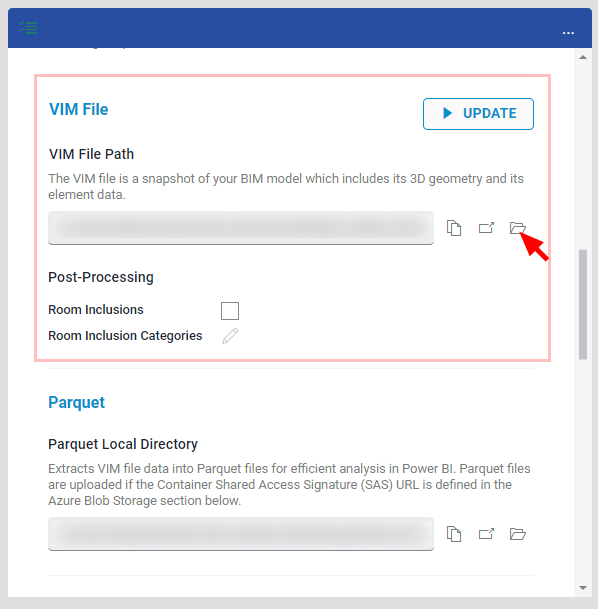
Click the folder icon beside the VIM File Path field, select a folder in which to store the exported VIM file, and click Save.
-
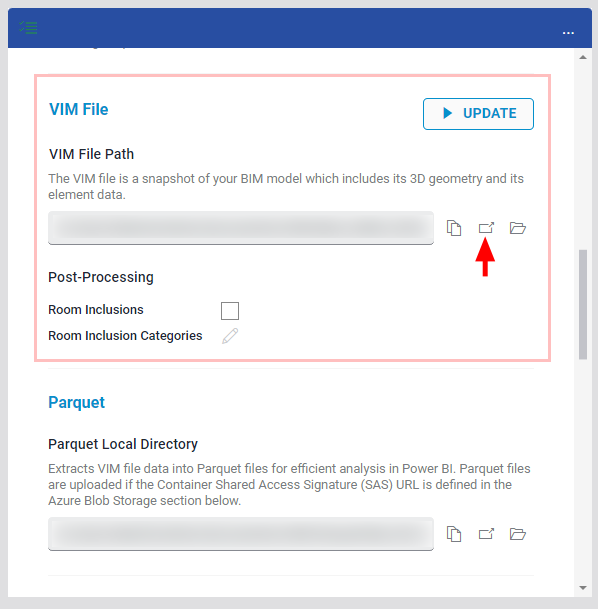
(Optional test) On the top of the project settings panel, click Run to verify the project source and VIM file destination settings. The IFC file is converted to a VIM file and saved in the specified folder. You can inspect the exported file in VIM Flex by clicking the Open icon beside the VIM File Path field (see below).
-
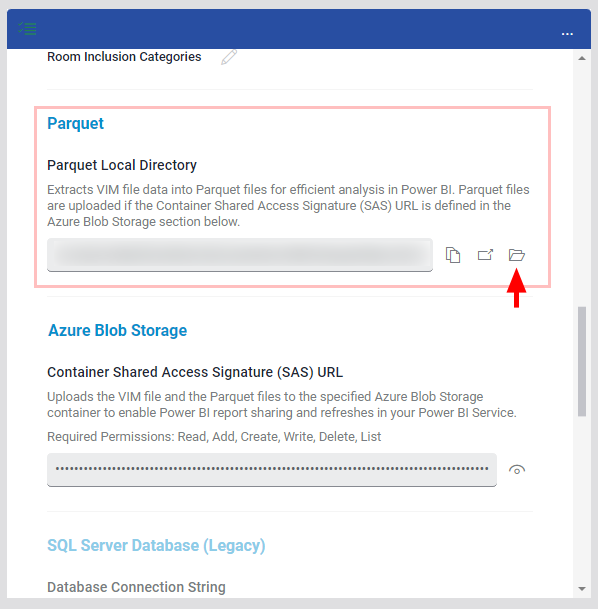
Scroll down to the Parquet section. Click on the folder icon to select a folder in which to store the processed Parquet files then click Save.
-
Obtain the Azure Blob SAS URL required for the next step and copy it to the Windows clipboard. The Blob SAS URL is generated on the Microsoft Azure Container page. See Creating Shared Access Tokens.
noteIf your IT department created the Azure Storage Account, you will need to contact them to obtain the Blob SAS URL
-
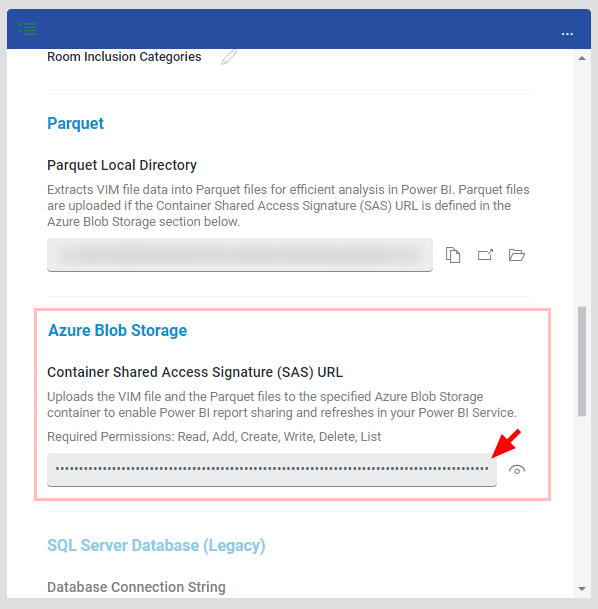
On the project settings panel, right-click in the Container Shared Access Signature (SAS) URL field and choose Paste. The same SAS URL can be used for all of your VIM projects. Important: this SAS URL has an expiry date and must be refreshed based on your chosen expiry date.
-
Click Save.
-
Scroll to the top of the project settings panel and click Run.
When complete, the project Status will say "Done!", and a green checkmark will be displayed beside the project in the projects list.
The fields in the Power BI section of the project settings are populated automatically from the Azure Blob Storage settings.